
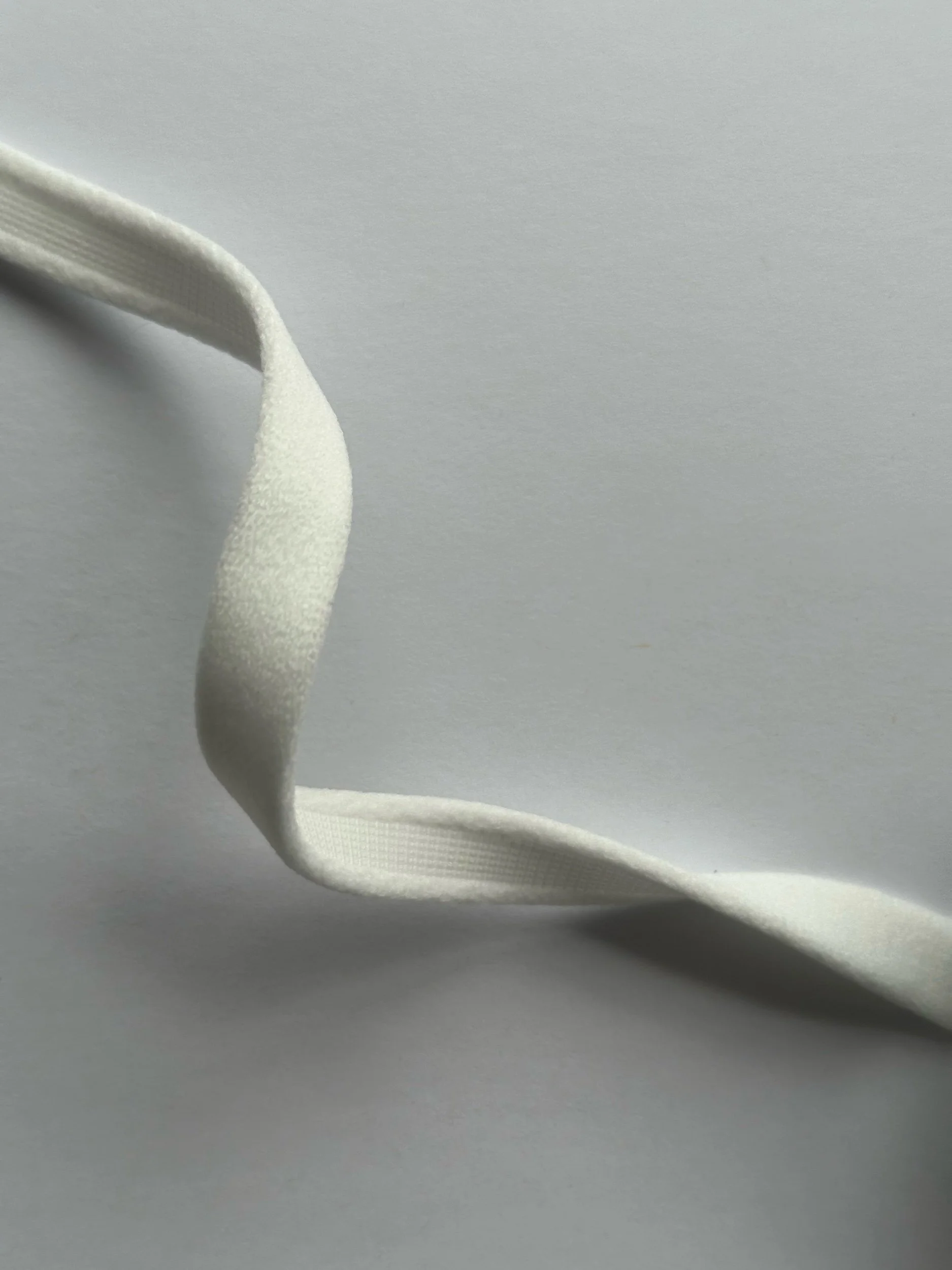
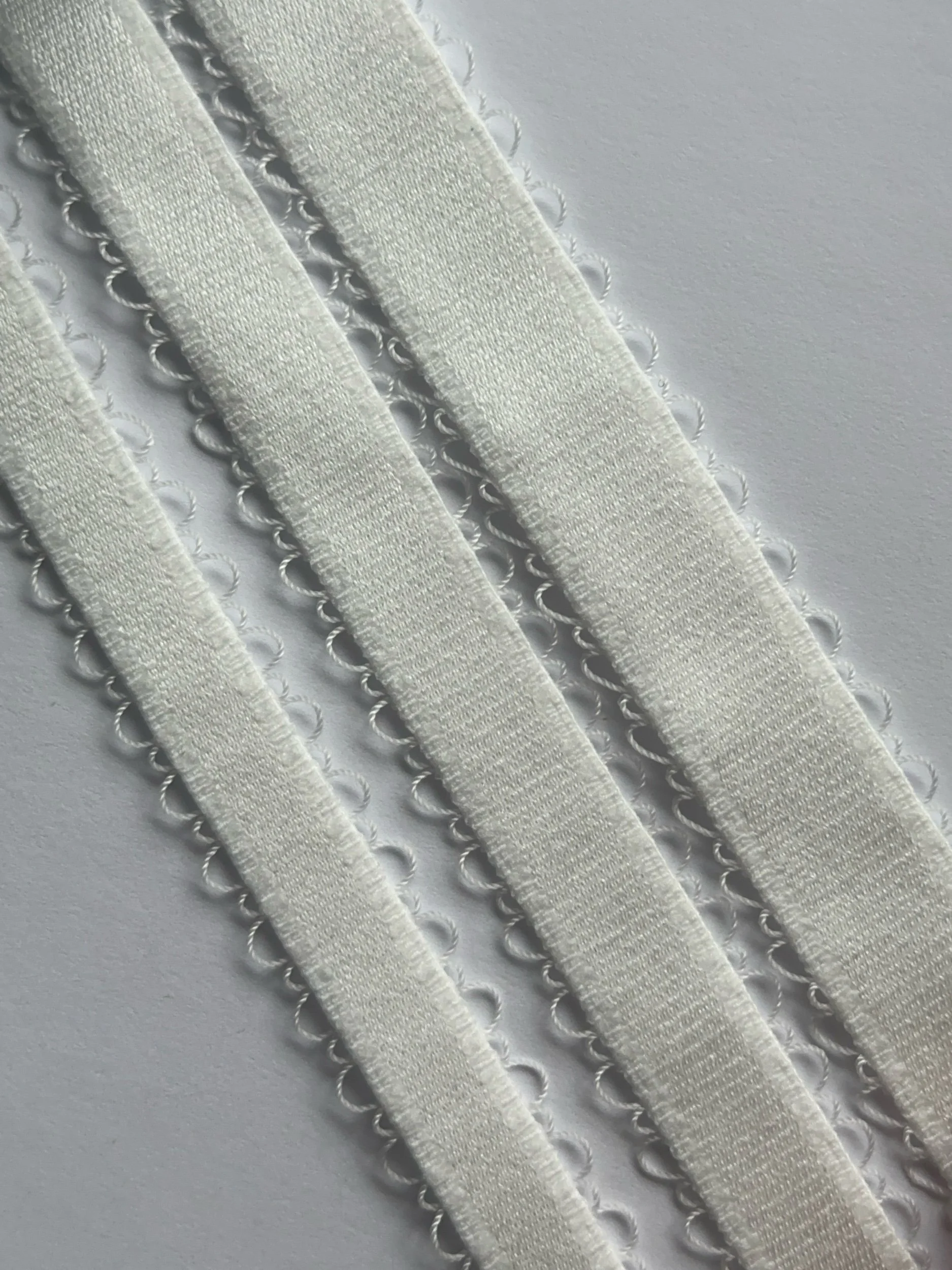
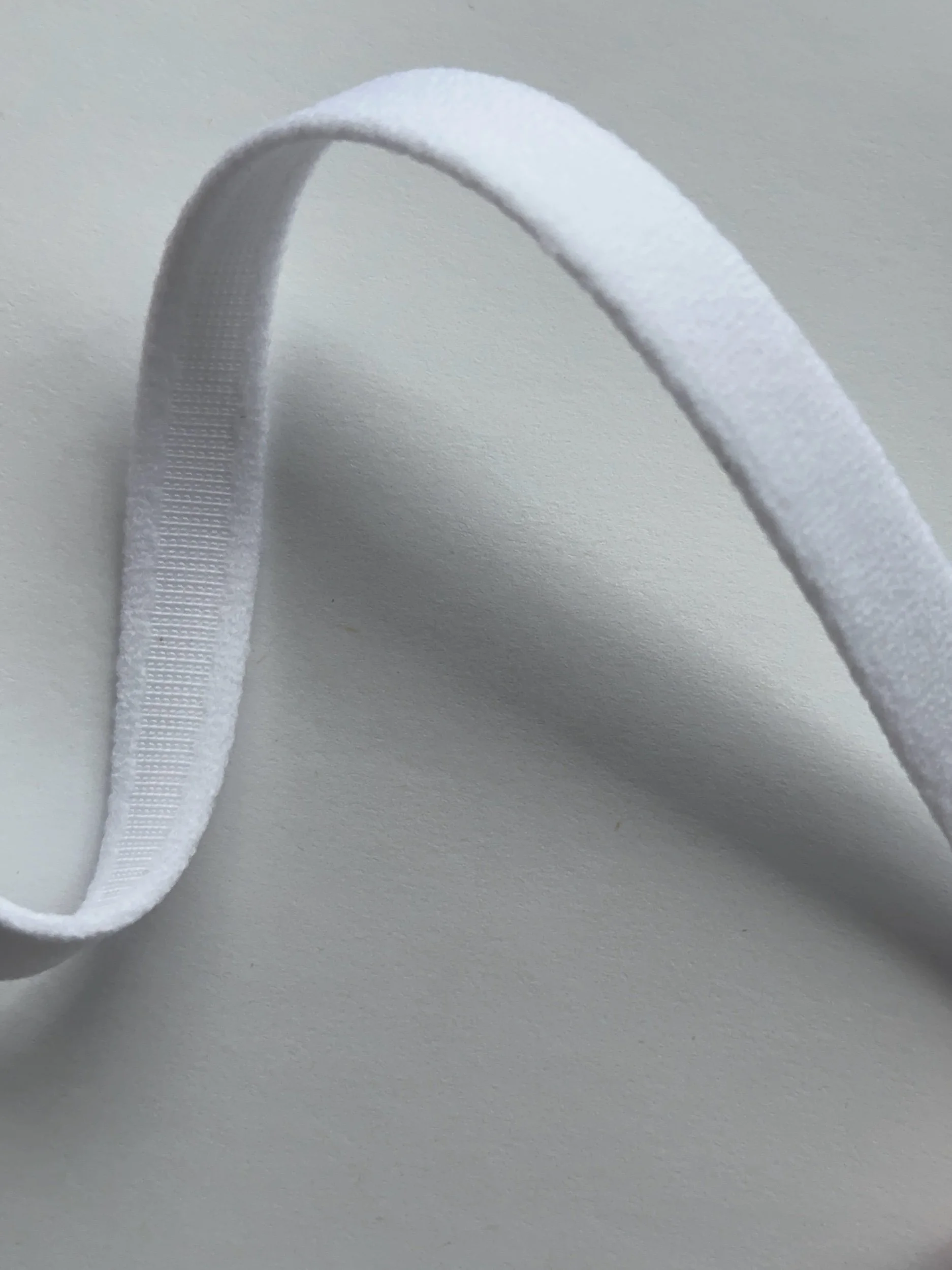
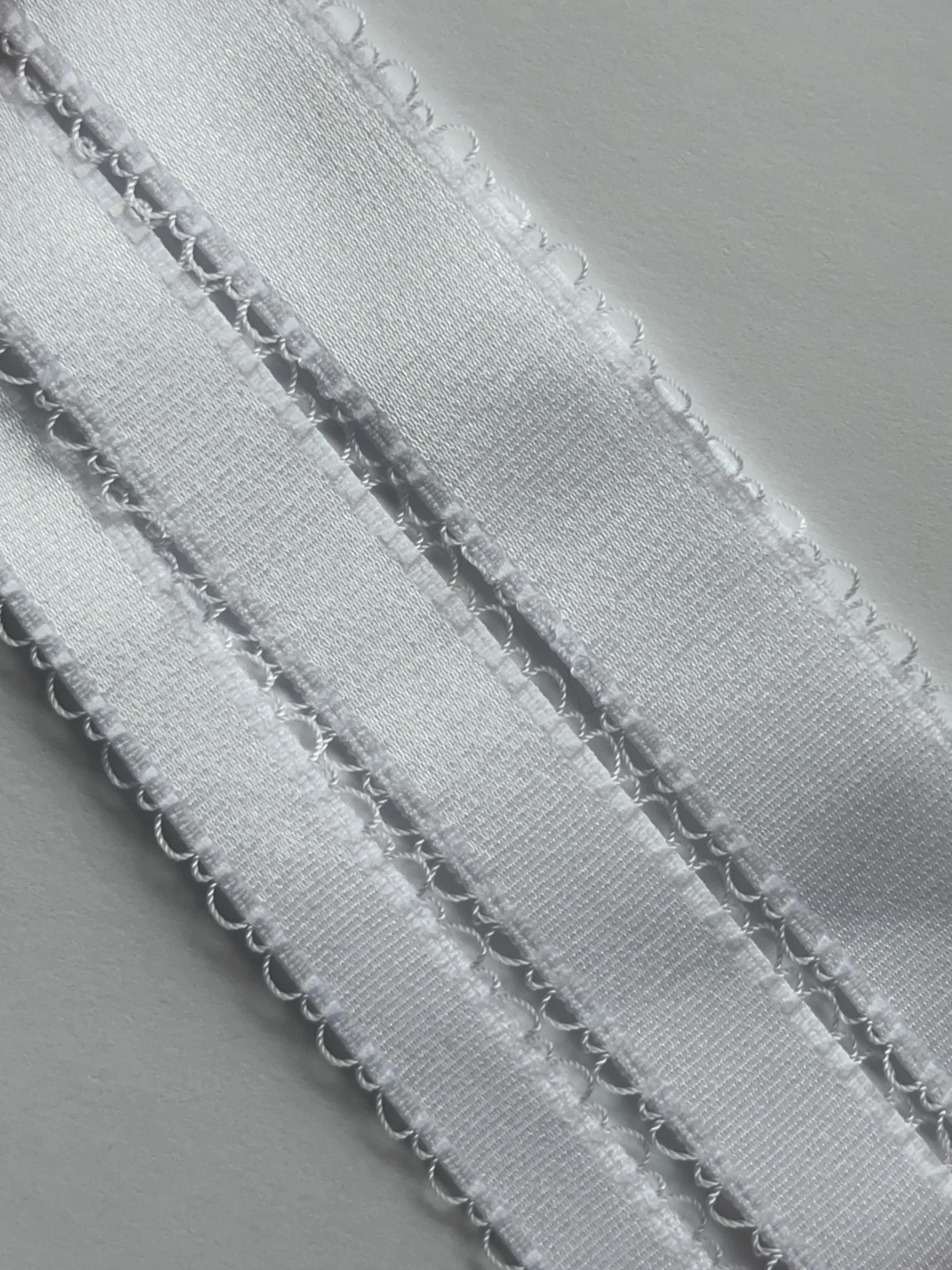
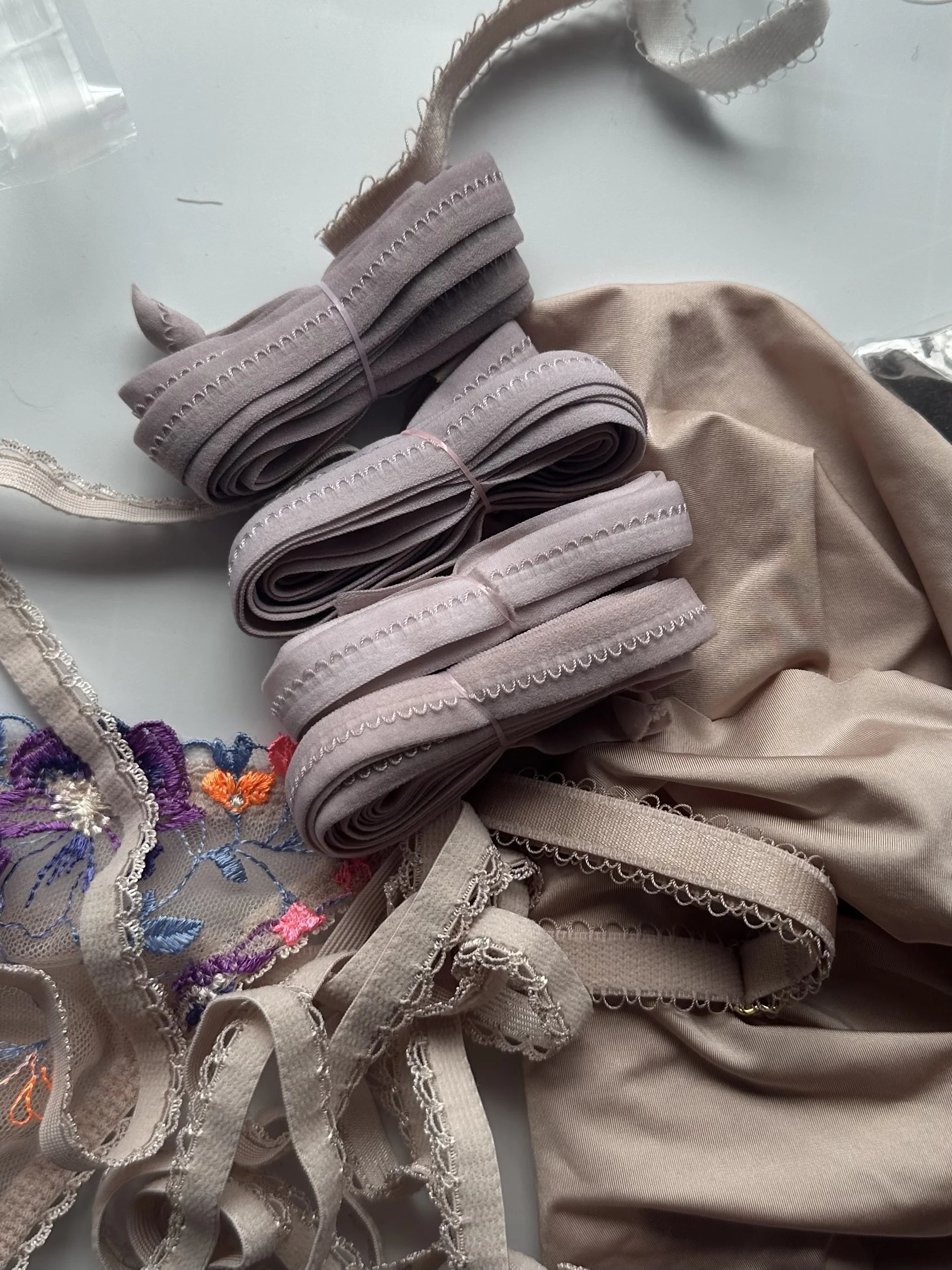
This picot fold-over elastic contains optical brighteners. When dyed, materials with optical brighteners can shift cooler in tone.
Although dyed in the same bath as the greige elastics shown, the picot fold-over developed a subtle purple-leaning hue, while the greige elastics absorbed the dye as a warmer brown.
You might be wondering which nylon color is best for dyeing.
From my experience, the best place to start is with untreated nylon; fabric that has not been previously dyed or optically brightened.
Many “bright white” nylons have been processed with UV fluorescent brighteners. These are essentially colorless dyes that bond to the fiber and make the material appear whiter and cooler in tone. The problem? They occupy dye sites in the fabric, which can interfere with how acid dyes absorb.
I’ve seen this firsthand in some batches of bright white elastics. Certain areas resisted dye uptake and produced uneven results, sometimes showing subtle striping where one section dyed darker and another remained lighter.
When you begin with a truly fresh, untreated base, there’s far less guesswork. Your dye behaves more predictably, and you don’t have to troubleshoot why one component is taking color differently than another.
This issue may be less noticeable when dyeing to very deep, fully saturated shades. However, it becomes much more apparent when working with diluted colors, pastels, or nuanced tones. Optical brighteners tend to cast a cooler hue, which can shift your final color in unexpected ways.
If consistency matters (and in lingerie dyeing, it usually does), starting with untreated nylon gives you the most reliable and controllable results.
What Are Optical Brighteners (and Why Do They Matter)?
Optical brighteners — sometimes called OBAs (optical brightening agents): are fluorescent compounds applied during textile finishing. Their job is simple: they absorb ultraviolet light and re-emit it as blue light, which tricks the eye into seeing the fabric as a cleaner, cooler white.
In ready-to-wear textiles, this is usually desirable. The material looks crisp and bright on the shelf. But for dye work, these brighteners can complicate things.
Because OBAs bond to the fiber surface, they partially occupy the same sites that acid dyes would normally attach to. This means your dye may not penetrate as evenly or predictably as it would on untreated nylon.
How to Tell if Nylon Has Been Brightened
Unfortunately, most suppliers don’t clearly label whether a nylon has optical brighteners. However, there are a few clues I look for:
Extremely cool or blue-leaning whites
Fabrics marketed as “bright white” rather than natural white
Materials that glow strongly under blacklight
Inconsistent dye uptake during test swatches
A quick blacklight test can be very revealing. Brightened fabrics will often fluoresce strongly, while untreated nylon tends to appear much more muted.
When sourcing for dye projects, especially for lingerie elastics, this small test can save a lot of frustration later.
When Brightened Nylon Might Still Work
To be fair, brightened nylon is not always unusable.
In my experience, it tends to behave better when:
Dyeing to very deep, saturated shades
Working with darker colors where minor variation is less visible
Projects where perfect color matching is not critical
All components are “brightened”.
Where it becomes problematic is in:
Pastels
Dusty or muted tones
Multi-component lingerie sets
Situations requiring precise color matching
This is why I’m particularly selective about the base materials I choose when I know I’ll be dyeing in softer palettes.
Other Factors That Affect Dye Results
Optical brighteners are only one piece of the puzzle. Several other variables can influence how evenly nylon takes dye:
Fiber content
Blends containing higher spandex percentages may dye slightly differently than pure nylon components.
Heat consistency
Acid dyes require sustained high heat. Temperature drops can lead to uneven uptake.
Water pH
Acid dyes rely on an acidic environment. If the bath isn’t properly acidified, results may vary.
Fabric finishes
Some elastics and fabrics have residual finishes from manufacturing that can resist dye.
Material density
Firm elastics, plush elastics, and sheer meshes can all absorb color at different rates.
Understanding these variables makes troubleshooting much easier when something looks “off.”
I highly recommend checking out @DaintyAlchemy on Instagram for any dyeing methods. She walks through everything.
My Recommended Test Method (Highly Recommended)
Before committing to a full dye batch, I always recommend testing.
My typical workflow:
Cut small swatches of each material
Dye them together in the same bath
Rinse and fully dry
Compare under natural light
This quick step reveals:
Tone shifts
Uneven uptake
Differences between components
Unexpected cool or warm casts
Special Considerations for Lingerie Elastics
Lingerie elastics can be particularly sensitive during dyeing because of their structure.
Things I watch closely:
Picot edges sometimes take dye differently
Plush-backed elastics and channeling
Firm elastics can resist dye more than softer ones
Narrow elastics may show variation more easily than wide ones
TLDR: Textures!!!
Final Thoughts
While optical brighteners make fabrics look beautiful off the bolt, they can introduce unpredictability during dyeing , especially for the soft, nuanced color palettes many lingerie makers love.
Starting with untreated nylon gives you:
More consistent color
Better predictability
Easier color matching
Fewer surprises mid-process
And in my experience, anything that reduces guesswork in dyeing is always worth it.
If you do decide to use bright white, try to make sure that all other notions are also bright white white so that they are the same hue.
Let me know if this information has helped you or if you have anything to add!